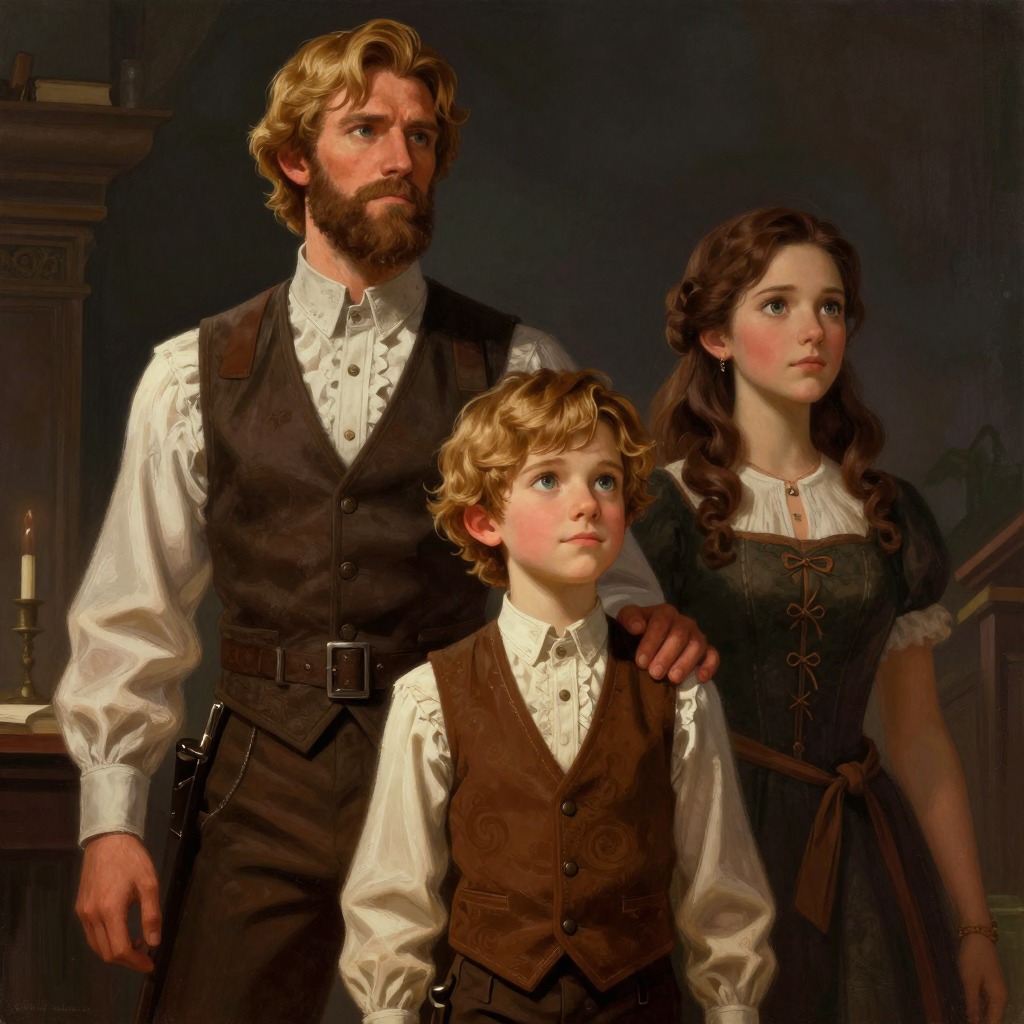
Mrs. Everdeen
Mrs. Everdeen is the mother of Katniss and Primrose Everdeen, a woman whose life in District 12 is defined by a single, shattering loss and its aftermath. Once a beautiful apothecary's daughter from the merchant class who married a coal miner for love, she becomes a figure of profound ambivalence in her eldest daughter's eyes: the source of both healing knowledge and a devastating abandonment that Katniss can neither forgive nor forget.
Identity and Background
Mrs. Everdeen was born into the small merchant class of District 12, the daughter of an apothecary who ran a shop in the nicer part of town. She fell in love with Katniss's father, a coal miner and hunter who sold medicinal herbs to her family's shop, and left her comfortable home to live with him in the Seam. Katniss recalls that her mother "must have really loved him to leave her home for the Seam." She was once very beautiful, though by the time of the story she appears worn and beaten-down. Her medical knowledge, inherited from her father's apothecary trade, makes her one of the few healers in a district where almost no one can afford doctors. She keeps a book filled with ink drawings of plants, their names, gathering seasons, and medical uses, to which Katniss's father added entries about edible plants. This book becomes a crucial survival tool after his death.
Collapse and Abandonment
When Katniss is eleven years old, her father is blown to bits in a mine explosion. The district gives the family a small amount of compensation, enough to cover one month of grieving, after which Mrs. Everdeen is expected to get a job. Instead, she does nothing but sit propped up in a chair or huddle under blankets on her bed, her eyes fixed on some distant point. She stirs occasionally, getting up as if moved by urgent purpose, only to collapse back into stillness. No amount of pleading from seven-year-old Prim seems to affect her. Katniss, terrified, realizes she has lost not only a father but a mother as well. At eleven, she takes over as head of the family, buying food, cooking, and trying to keep Prim and herself presentable, all while hiding their predicament to avoid being sent to the community home. The family slowly starves until Katniss, after Peeta Mellark's gift of burned bread, finds the courage to enter the woods alone and begin hunting. The sight of a rabbit Katniss has shot seems to stir something in Mrs. Everdeen: she rouses herself, skins the carcass, makes a stew, and then goes back to bed. But when the stew is done, she eats a bowl. Slowly, she returns to her family, beginning to clean, cook, and preserve food, and eventually people trade or pay her for her medical remedies. One day, Katniss hears her singing. But the damage is done. Katniss keeps watching, waiting for her mother to disappear again, and a small, gnarled place inside her hates her for her weakness, her neglect, and the months she put them through. Prim forgives her, but Katniss takes a step back, putting up a wall to protect herself from needing her mother, and nothing is ever the same between them.
Role in the Reaping and Aftermath
On the day of the reaping, Mrs. Everdeen lays out one of her own lovely dresses for Katniss—a soft blue thing with matching shoes—and does her hair in an elaborate braid. Cinna, Katniss's stylist, later calls the hairstyle "beautiful" and "classic," noting that Mrs. Everdeen has "very clever fingers." When Prim's name is called and Katniss volunteers, Mrs. Everdeen is present in the Justice Building for the goodbyes. Katniss grips her arm hard and commands her not to leave again, shouting that she cannot "clock out" and leave Prim on her own. Mrs. Everdeen pulls her arm away, angered, and insists she was ill and could have treated herself if she had the medicine she now has. Katniss acknowledges this might be true—she has seen her mother bring back people suffering from immobilizing sadness—but insists it is a sickness they cannot afford. Before leaving, Katniss tells her mother she loves her, but the unresolved tension between them remains a source of pain. Katniss thinks of how she yelled at her mother in the Justice Building, and wonders if the love she also expressed will balance things out. She worries that her mother might already be slipping away again, leaving the weight of the world on Prim's fragile shoulders.
Thematic Significance
Mrs. Everdeen embodies the psychological devastation that the Capitol's system inflicts on families. Her collapse into grief is not a personal failing but a predictable consequence of a life lived under constant threat of loss, starvation, and brutality. Katniss's inability to forgive her mother's weakness reflects the brutal pragmatism that survival in District 12 demands: there is no room for incapacitating sorrow when there are children to feed. Yet Mrs. Everdeen's eventual return to functionality, her skill as a healer, and her quiet acts of love—the dress, the braided hair, the book of plants—complicate Katniss's judgment. She is neither wholly good nor wholly bad, but a woman broken and partially mended by forces far larger than herself, and her relationship with Katniss remains one of the novel's most painful, unresolved wounds.